















How to Choose a Profitable Affiliate Marketing Niche in 2025

Table of Contents
Introduction
During my beginner years in affiliate marketing, one of the most challenging tasks I ever encountered was choosing the right niche. From scouring the internet to watching Podcasts and YouTube videos on niche-specific topics was all I did just to get the right niche. Choosing the right affiliate marketing niche can significantly impact your success. Pick the wrong one, and you might find yourself stuck with content that doesn’t resonate, brands that don’t convert, and endless frustration.
Choose the right niche and you could unlock a steady stream of passive income and establish yourself as a trusted authority in your space. The problem is that many beginners and marketers fall into the trap of relying on broad, outdated niche lists or guesswork instead of data-backed insights.
In this how to choose a profitable affiliate Marketing niche guide, we will provide you with the tools, techniques, and proven strategies that you can rely on to identify a profitable and sustainable niche that aligns with your strengths and market demands. Furthermore, I will also share with you some of the industry’s top experts who have guided me in choosing the right niche.
Understanding Affiliate Marketing Niches
Before you start making money with affiliate marketing, there’s one big decision you need to make as an Affiliate Marketer, and that is choosing a profitable affiliate marketing niche. A niche is just a fancy way of saying the specific area you’ll focus on in any given market. Think of it as your little corner of the internet where your content shines. It’s where your skills, passions, and what your audience cares about all come together.
What Is a Niche in Affiliate Marketing?
A niche is essentially a highly focused segment of a larger market. For example, instead of trying to reach all fitness lovers, you might concentrate on home workout gear for busy parents or plant-based diets for athletes. Having a niche makes your marketing clearer and helps you stand out from the crowd. It shapes the products you promote, the way you talk to your audience, and the people you attract.
Why Is Selecting the Right Niche Crucial?
The right niche is more than just a good idea; it’s the foundation of your affiliate marketing success. Here’s why:
- Build a Stronger Connection: When you focus on a niche, you’re reaching an audience that truly needs what you offer. Instead of sending out a generic message, your content speaks directly to their interests and challenges, making it way more relatable and engaging.
- Stand Out from the Competition: Focusing on a specific niche helps you avoid competing directly with large corporations and oversaturated markets. Instead, you can claim your own space and build authority there, as this tends to be much easier than competing with the big players in the market.
- Higher Conversion Rates: By focusing on a specific audience and addressing their needs, your recommendations appear more genuine and relatable, leading to increased conversion rates. This builds trust and makes people more likely to buy through your affiliate links. But picking the wrong niche? That’s a recipe for frustration. If it’s too saturated, not something you know much about, or doesn’t offer good monetization potential, you’ll end up putting in a ton of effort for little reward.
Types of Niches
Broad vs. Micro-Niches
Not all niches are created equal. Broad niches might sound like a great idea, but they can be tricky. Sure, topics like health, technology, or travel can generate a lot of traffic, but they also come with significant competition. Think about how many people are already out there blogging about “fitness” or “personal finance.” That’s where micro-niches come in. They’re all about zeroing in on a super-specific corner of a bigger category. For example:
- Broad Niche: Fitness
- Micro-Niche: Yoga routines for people with chronic back pain
- Broad Niche: Technology
- Micro-Niche: Reviews of noise-canceling headphones for remote workers
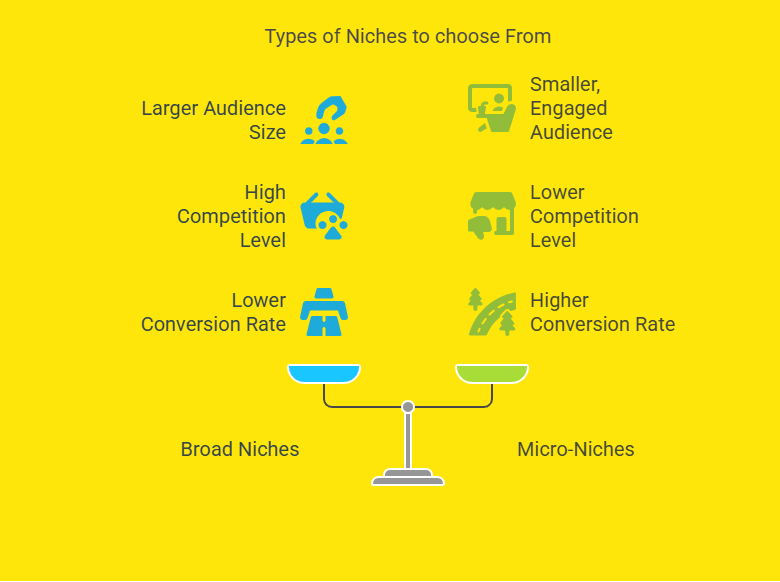
Choosing a micro-niche means focusing on a smaller, super-specific audience that’s eager for content that speaks directly to them. Sure, the audience might be smaller, but they’re usually more engaged and easier to convert. Additionally, micro-niches are an excellent way for new marketers to differentiate themselves without directly competing with established industry players. Picking the right niche isn’t just about jumping on what’s trending; it’s about narrowing your focus to something that matches both market demand and what you’re good at. Thus, put your focus on a micro-niche if you want to build success faster and avoid burnout.
What are the less competitive niches for affiliate marketing?
For me, less competitive niches are those that are not particularly popular among digital marketers or Affiliates. From sources on the web, some of the less cooperative niches include:
- Gardening: A $70 billion industry with opportunities in urban farming and homesteading.
- Home Security: A niche driven by urgency, offering products like cameras and alarm systems.
- Pet Care Innovations: This category encompasses sub-niches, including pet insurance and specialized pet products. e.g, Tofu cat litter and GPS pet trackers.
- Do It for Yourself and Crafts: A $50 billion market with low competition for arts and crafts supplies.
- Essential Oils: A growing $27 billion market catering to alternative health solutions.
- Metaphysical Products: Includes items like tarot cards and crystals, with a loyal audience.
- Vegan Products: A $20 billion market focusing on plant-based food and lifestyle products.
- Fishing: A $212 billion industry with opportunities in gear and accessories.
These niches are less saturated, making them ideal for affiliate marketers looking to carve out a unique space in the market.
How to determine if a niche is profitable
Choosing a niche is more than picking a topic that catches your eye; it’s about finding the sweet spot where your passion, potential profitability, and opportunity align. To ensure your efforts yield tangible results, you need to evaluate critical factors that determine whether a niche can generate sustainable growth and income over a given period. Below are some key criteria to focus on in your analysis.
1. Analyze Market Demand
According to my mentor, Joey Babineau of Powerhouse Affiliate, a good niche requires consistent demand or, even better, growing demand. Without that, creating content and promoting products can feel like an uphill battle. The key is to find a niche with an audience that’s genuinely looking for solutions, advice, or products. For example, the AI Niche is currently in high demand as businesses seek AI tools to automate processes and reduce costs.
2. Competition Analysis
Competition is one of the most important factors to consider when seeking a niche. The level of competition in your niche can guide your decision. For example, a crowded niche like finance typically means a high demand, but also requires more effort to stand out. However, niches with moderate competition often have ripe opportunities for new marketers. For example, the AI niche, being relatively new, is definitely full of ripe opportunities, even for beginners.
3. Audience Demographics
Another crucial factor in determining whether a niche is profitable is understanding your target audience. Understanding your target audience is key to building a strong connection and driving successful conversions. Who are the people searching for content in this niche? What do they need, and what kind of products are they willing to invest in? These are some of the important questions you need to ask yourself as you explore a niche.
4. Product Availability and Monetization
As you explore a niche, one of the most important things to look for is product availability in the niche and whether people/ other marketers are promoting and monetizing these products. If you see numerous ads for these products on Google, then that’s a sign that it’s a good and profitable niche. A valuable piece of advice I received at Powerhouse Affiliate was to check the availability of products in a given niche using Google. Then, check to see if other affiliates are promoting those same products through Ads on Google or Microsoft/Bing Ads.
Bonus Tip: The Scalability Factor
Once you’ve determined if a niche is profitable, then it’s time to think about growth. A good niche gives you room to branch out into related areas. For example, if you start with “Keto-based diets for athletes,” you could easily expand into related topics such as “sustainable protein supplements” or “vegan meal prep gadgets.”
Quick Checklist for a Profitable Niche:
- Is there consistent demand (e.g., stable or upward trend in search interest)?
- Can you compete without being drowned out by market leaders?
- Do you understand who your audience is and what matters to them?
- Are there suitable products with strong affiliate opportunities?
- Is there room to scale your niche into related markets?
What Are The Best Niches For Affiliate Marketing
The best affiliate marketing niches are those that have high consumer demand, offer competitive commission rates, feature numerous products to promote, and have moderate competition. Some of the top-performing niches for 2025 include:
- Health and Wellness
- Health and wellness is one of the largest niches with Sub-niches such as Weight loss, fitness, mental health, and nutrition.
- Why: Evergreen demand with high-ticket and recurring revenue opportunities.
- Personal Finance
- In personal finance, some of the best Sub-niches are investing, credit repair, and debt settlement.
- Why: High-paying affiliate programs and consistent demand.
- Technology
- In the Technology niche, some of the good Sub-niches are SaaS, web hosting, VPNs, and gadgets.
- Why: High commissions and a growing market.
- Travel
- Under travel, we have sub-niches such as luxury travel, budget travel, and travel insurance.
- Why: High-ticket items like flights and hotels.
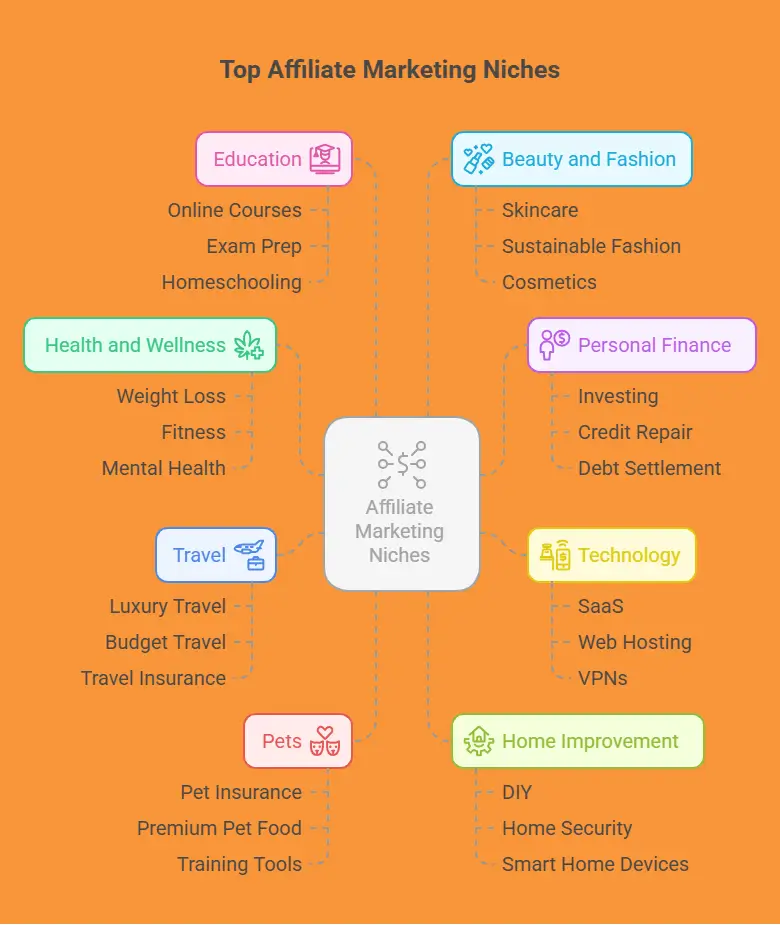
- Pets
- Sub-niches like Pet insurance, premium pet food, and training tools.
- Why: Passionate audience willing to spend.
- Home Improvement
- Within this niche, we have sub-niches, including DIY, home security, and smart home devices.
- Why: Growing interest in home upgrades.
- Education
- Sub-niches like Online courses, exam prep, and homeschooling.
- Why: Increasing demand for e-learning.
- Beauty and Fashion
- Sub-niches like Skincare, sustainable fashion, and cosmetics.
- Why: High consumer spending and influencer-driven.
These niches offer a mix of high demand, profitability, and opportunities for specialization.
Niche Research Techniques
One of the things I was taught at Powerhouse Affiliate is the importance of conducting research for a niche you are looking to explore or find. Finding the perfect niche isn’t based on instinct alone, but instead on Data, research, and validation. By leveraging the right tools and strategies, you can pinpoint opportunities with high potential and minimize the risk of pursuing a dead-end idea. Below are some actionable methods to help you conduct effective niche research if you are looking to choose one.
1. Use Tools to Identify Trends and Demand
To ensure your niche remains viable, it’s essential to monitor demand over time and identify opportunities for growth. Here are some tools to help you do that:
- Google Trends
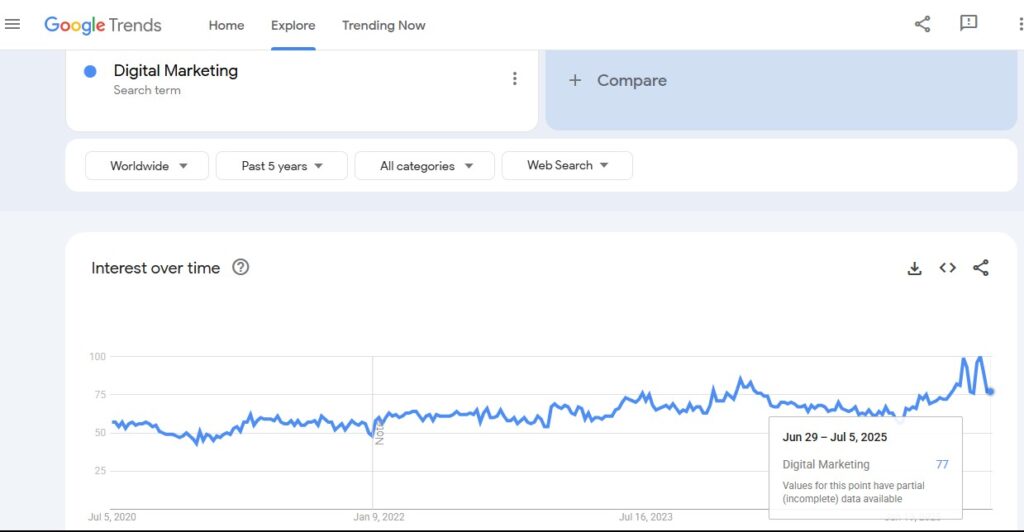
The first tool you can start with is Google Trends. Google Trends displays the popularity of search terms over time, enabling you to determine whether interest in your niche is increasing or decreasing.
Example: If you are thinking about “Digital Marketing,” then visit Google Trends to see if interest has been growing steadily over the past five years or if it’s just a passing trend.
- Ahrefs
Ahrefs is another excellent tool for research, provided you’ve the budget for it. You can analyze keywords, check out what your competitors are doing, and figure out the Traffic Potential (basically, how much total search traffic a keyword or topic can bring in). However, if you’re starting out and money is tight, I wouldn’t recommend it. Their cheapest plan is $129, which isn’t exactly beginner-friendly. Instead, go with Google Keyword Planner. It’s free and does a pretty solid job for keyword research!
Practical Step:
- Start by typing a broad keyword, like “green cleaning solutions,” into Ahrefs’ Keyword Explorer.
- Use filters to find keyword ideas with low competition (Keyword Difficulty: 10-20) but decent search volume.
- Check out the Top Pages report to see what’s already working for those keywords.
Pro Tip: Look for keywords with moderate competition and a clear trend of increasing organic traffic; this is a good signal for a profitable niche.
- Ubersuggest
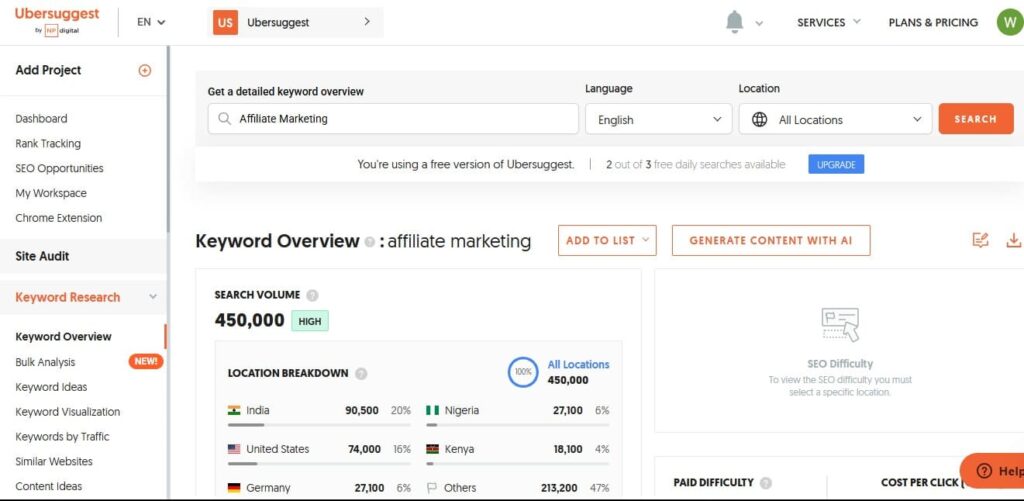
Ubersuggest, another excellent tool, is a solid option, especially if you’re on a budget. It provides keyword suggestions, search volume, and SEO difficulty statistics. It’s perfect for finding hidden opportunities in less competitive niches. Plus, it’s way more affordable than tools like Ahrefs or Semrush!. A free account with UberSuggest limits you to only three searches per day. Alternatively, you can pay for lifetime use at just $120 for one site and 150 searches per day.
2. Analyze Competitors for Inspiration
Another great way to determine if the niche you are aiming to target has potential is by examining your competitors. It can show you what’s working for them and even highlight opportunities they might be missing. Here’s how you can get started:
- Audit the Top Players
- Take a look at the websites dominating search results in your niche. A good example of such a website is NerdWallet, a major financial website. If you’re going for the “personal finance “, personal loans, or student loans niche, I am sure you can never miss nerdwallet. Additionally, you can also explore other popular blogs or YouTube channels that cater to this audience.
- What to look for:
- Popular content types (reviews, tutorials, comparisons, and Listicles).
- Affiliate products they recommend.
- Gaps in their content (e.g., what market demand are they not covering?).
- Pro Tip: Use tools like SimilarWeb or Ahrefs to analyze competitors’ traffic strategies. For instance, if you find a competitor thriving with product videos, consider adding that format to your own strategy.
3. Use Keyword Modifiers to Dig Deep
Keyword modifiers are basically words or phrases you add to your main keyword to make it more specific and match different search intents. They’re super helpful for finding targeted, buyer-focused content ideas. Some of them include “best,” “review,” “how-to,” “coupon,” “Top,” or “vs.” You can check more about Keyword modifiers here on Ahrefs Blog.
Example
- Start with a keyword like “eco-friendly laundry detergent.”
- Add modifiers using a tool like Keywords Everywhere or Ahrefs’ Keywords Explorer to refine the results (e.g., “best eco-friendly laundry detergent for families” or “Top 10 eco-friendly laundry detergent for families”).
- Look for phrases that people frequently search for but don’t have a lot of competition. This way, you can tailor your content to stand out.
4. Leverage Niche Marketplaces
A niche marketplace is an online platform that focuses on a specific category, interest, or target audience, rather than attempting to serve every customer, as Amazon or eBay do. Some of the top niche marketplaces include Fiverr, for freelancers, Etsy, for handmade and craft items, and Fillpa, for digital assets, among many others. Exploring existing businesses in this niche market, such as Flippa, can provide firsthand examples of profitable ideas.
- How to Explore Niche Markets:
- Check out recent listings of blogs or content sites making money with affiliate links.
- Filter by categories that match your interests, such as travel gear, tech gadgets, or niche beauty products, to find exactly what you’re looking for.
- Look for common trends in successful listings, such as popular product categories or effective content strategies.
- Example: If you spot a Flippa listing for a blog about “compact espresso machines” that generates $500 a month, then that might give you the idea to dive into a micro-niche, such as small-space kitchen appliances or the best coffee-making machines.
5. Test Potential Niches with Real Audiences
From my experience with Powerhouse Affiliate Courses, one thing I recall is that before trying anything significant, test it out first. Therefore, before diving headfirst into a niche, try to test the waters with some small experiments. Here’s a simple example:
- Run Paid Ads: Platforms like Google Ads or Facebook Ads are great for testing niche ideas without incurring significant expenses. Just create a simple landing page or blog post and see how people respond. Are they clicking? Engaging? That’s your sign of interest.
- Engage on Forums and Communities:
- Platforms like Reddit, Quora, and niche-specific Facebook groups can reveal whether your target audience is actively discussing your niche. Join these groups on Reddit, Facebook, and Quora, for they are a good source of knowledge.
- Example: Search for terms like “pet toys for large dogs” on Reddit and gauge participation in threads to confirm demand.
- Example Setup:
- Niche Idea: Sustainable weight-loss programs.
- Ad Copy: “Struggling to lose weight and stay eco-friendly? Check out our step-by-step guide to sustainable dieting!”
- What to Watch For: If you’re getting a high click-through rate (CTR) and solid engagement, you might be onto something!
It’s a quick and easy way to see if your idea has potential.
6. Summary of Niche Research
If you want to organize your research and hit the ground running, here’s a simple framework to follow:
- Start with what you love: Think about topics you’re passionate about, maybe it’s tech gadgets, cooking, or budget travel. Write them all down!
- See if people care: Use tools like Google Trends or Ahrefs to check if others are searching for topics related to your interests.
- Look for products to promote: Join free affiliate networks or Amazon to see if there are enough products related to your Topics that people are promoting.
- Review your competition: Take a peek at what others are doing. Is there a unique angle you can bring to the table?
- Test the waters: Try running a small campaign or publishing a piece of content to gauge your audience’s response. Experiment also with social media.
Final Word on Research
From my years in Affiliate Marketing, one thing I have noted is that Research is crucial when selecting the ideal affiliate niche. By using the right tools and some simple validation techniques, you can confidently choose a niche that sets you up for a profitable, long-term affiliate marketing success.
Common Mistakes to Avoid when Selecting a Niche
Picking the right affiliate marketing niche is crucial if you want to succeed in the long run, but it’s easy to make mistakes along the way. These slip-ups can cost you time, energy, and money. Let’s go over some common pitfalls and how you can avoid them to make smarter choices!
1. Choosing Broad Niches
A common mistake new affiliate marketers make is selecting niches that are too broad, such as “health” or “technology.” Sure, big niches sound appealing because of the vast audience, but the competition is brutal, and it’s easy for your content to get buried in the crowd. As we have advised you earlier, to avoid this, please focus on micro-niches that target specific audiences. For example, instead of “health,” consider “yoga routines for seniors with limited mobility” or “plant-based diets for Soccer Players.” Pro tip: Please avoid Broad Niches as much as possible, as you can easily get lost in the crowd.
2. Failing to Validate Demand
Another significant mistake new marketers make is jumping into a niche without first checking if there is sufficient demand or interest in the topic. This is a mistake I personally fell into once before when i went into the haircare niche. I felt I could write blogs about hair loss and set up affiliate landing pages to promote products, so I jumped in without conducting much research or analysis.
One of the main challenges I encountered was that I struggled to write engaging blogs about hair loss, as some of the treatment products for hair loss were medicinal, and I was neither a doctor nor a pharmacist; therefore, I could not determine how good the products would be for the audience i was selling to.
To avoid this problem, I recommend you conduct adequate keyword research to check search volumes and trends, and engage with online forums, social media groups, or platforms like Quora and Reddit to gauge audience activity around your niche ideas
3. Ignoring Competition
Avoiding oversaturated markets is a smart move as a marketer, but completely steering clear of competition can backfire on you. One piece of advice I received during my schooling days at Powerhouse Affiliate is that “Competition is good for business,” thus, a bit of competition usually means there’s solid demand. Additionally, skipping competitor analysis may result in missing key gaps and opportunities you could have taken advantage of.
To avoid this, ensure to study top competitors in your niche using SEO tools like SEMrush or Ahrefs. Analyze their top-performing content and affiliate products they are promoting, and look for content gaps or underserved questions that your competitors haven’t addressed. Then fill in the Gaps you have identified as you continue building.
4. Promoting Irrelevant or Low-Quality Products
As a human being, nobody wants to be sold trash. At Powerhouse Affiliate, we always believed one thing: as an affiliate, you should never promote products you don’t trust. If you push products that don’t match your audience’s interests or are of low quality, you’ll lose their trust quickly and ultimately damage your business. And when that trust is gone, they’re less likely to come back or take recommendations from you seriously. Note: Never promote products you wouldn’t use yourself. Only promote products you’ve used or thoroughly vetted.
5. Overlooking Long-Term Sustainability
Joey Babineau, my tutor at Powerhouse Affiliate, referred to this as “shiny object syndrome.” Shiny Object Syndrome (SOS) in affiliate marketing refers to the phenomenon of being distracted by every new trend, tool, or opportunity that promises quick success. It’s like chasing every shiny thing that catches your eye instead of staying focused on what you’re already working on. You might think that jumping on trendy niches might seem like a quick way to gain traction, but fads come and go. A niche that peaks quickly may leave you with few opportunities for continued growth in the future.
A simple example is the fidget spinner trend of 2017, where people went crazy for the fidget spinners, but the market quickly became saturated with countless variations, and consumer interest decreased over time. To avoid the shiny object problem, I recommend you focus on evergreen niches with consistent or growing demand, such as personal finance, fitness, digital Marketing, or eco-friendly living.
6. Not Making a Plan
Planning is key in any business environment; there’s a reason people say, “Failing to plan is planning to fail.” However, many affiliate marketers skip this step and dive straight into blogging or posting links without a solid content plan. This is exactly what I did in the first Affiliate Marketing niche I chose: I went in headfirst without a plan, and I ended up disappointed.
To avoid this, try creating a content calendar with a mix of evergreen and trending topics tailored to your audience. And don’t forget to set clear goals, such as growing traffic, boosting conversions, or increasing affiliate revenue, so that you can track your progress over the next six months. This can be done easily with most AI tools.
Industry experts you can learn from
As I have previously promised, I would like to share with you some of the Industry experts who have helped me over the years with some of the critical decisions I had to make when choosing a niche. they are
Joey Babineau of Powerhouse Affiliate
Joey has been my teacher and mentor at Powerhouse Affiliate, and I have learnt most of the things I know about affiliate marketing through his courses. Below are two of his YouTube videos that have guided me on this niche-choosing path. You can check out our review of Powerhouse Affiliate here.
John Crestani
Another Industry expert you can also learn from is John Crestani. He is a renowned affiliate marketer and one of the top players. he also has an affiliate course called Super Affiliate System. You can check out our review of The Super Affiliate System by John Crestani here.
Matt Diggity
Another excellent Industry expert is Matt Diggity. He is an SEO expert who has been featured in prominent publications such as Forbes and The Huffington Post. His blog offers valuable insights and strategies for ranking websites at the top of search engine results pages. You can also check out our review of Matt Diggity’s course, the Affiliate Lab, here.
Conclusion
Selecting a profitable affiliate marketing niche requires thorough research, introspection, and strategic planning. As discussed throughout this guide, success begins with narrowing your focus and identifying micro-niches that align with your interests and market demand. This involves conducting in-depth competitor analysis, validating audience needs, and ensuring there are reputable products to promote. Avoiding common mistakes, such as picking overly broad topics or chasing fleeting trends, will help you build a sustainable presence and long-term income.
By applying these proven strategies and leveraging reliable tools, you position yourself to select a rewarding niche that stands out from the competition. Remember, diligence and honesty in your approach not only build your credibility but also foster trust with your audience.
If you have questions or would like to share your own experience in choosing a niche, we invite you to join the conversation in the comments section. Your insights may also help fellow marketers on their journey.
Frequently Asked Questions
How do I choose a niche?
To choose a niche for affiliate marketing, start by identifying topics you’re passionate about or knowledgeable in. Research market demand using tools like Google Trends or Ahrefs to find niches with consistent interest and manageable competition. Evaluate profitability by exploring affiliate programs on platforms such as Amazon Associates or ClickBank, with a focus on high-ticket or recurring revenue products. Analyze competitors to spot gaps you can fill and define your target audience’s needs. Test your niche by creating content or running small campaigns to validate interest
What makes a perfect affiliate niche?
A perfect affiliate niche is one that balances personal interest, market demand, and profitability. An ideal affiliate niche aligns with your passions or expertise, allowing you to create authentic and valuable content. Market demand is equally important; this niche should have a consistent audience looking for products or services. Finally, profitability is a key factor; thus, the products you plan to promote in this niche should offer competitive commissions and also provide opportunities to build recurring revenue streams
How to scale affiliate marketing in niche markets?
To scale affiliate marketing in niche markets, begin by creating high-quality, SEO-friendly content that genuinely addresses your audience’s needs. Then, expand your reach using social media, email marketing, and even a few targeted paid ads to attract more people. Don’t put all your eggs in one basket. Partner with multiple affiliate programs to offer a variety of products and avoid relying too heavily on a single source. Furthermore, utilize automation tools to simplify your life, whether it’s for email campaigns, scheduling social media posts, or tracking performance. And don’t forget to regularly check your metrics to see what’s working and tweak your strategy as needed. Stay consistent, keep optimizing, and you’ll be on your way to scaling up successfully
What is a low-competitive and high-ticket niche?
A low-competitive, high-ticket niche is basically a sweet spot for affiliate marketers. It’s a market with little competition and big-ticket products that pay generous commissions. Here you can earn more per sale without having to fight for traffic. These niches typically focus on high-end items, such as luxury goods, premium software, or specialized services, which can generate commissions of $500 or more. For example, promoting private jet charters or high-end vacation packages in the luxury travel sector is a high-ticket niche.
Which tool is the best to find low competition niches?
The best way to find low-competition niches is by using tools that make it easy to check search trends, keyword difficulty, and market demand. Here are a few great options to try:
Google Trends: Perfect for spotting trending topics and seeing how interest changes over time.
Ahrefs: Great for checking keyword difficulty and analyzing what your competitors are doing.
SEMrush: A powerful tool for keyword research, traffic insights, and finding competition gaps.
Ubersuggest: A budget-friendly option for keyword ideas and checking competition levels.
AnswerThePublic: Awesome for discovering niche-specific questions and spotting content gaps.
These tools can help you identify niches with high demand and minimal competition, increasing your chances of success.
How do you choose a niche for affiliate marketing?
As a beginner, when choosing a niche for affiliate marketing, ask yourself some key questions, starting with identifying topics you’re passionate about or knowledgeable in, and assessing whether there are any market problems or issues that you can solve by creating content.
Then, Research market demand using tools like Google Trends or Ahrefs to find niches with consistent interest and manageable competition. Evaluate profitability by exploring affiliate programs on platforms such as Amazon Associates or ClickBank, with a focus on high-ticket or recurring revenue products.
Analyze competitors to spot gaps you can fill and define your target audience’s needs and pain points. Test your niche by creating content or running small campaigns to validate interest. Prioritize niches with long-term potential and steer clear of fleeting trends.
How do I figure out my niche?
To determine your niche, begin by identifying your passions and skills, then pinpoint problems you can solve with those skills. Then, research market demand using tools like Google Trends and other keyword tools, such as Ahrefs or Semrush. Analyze competition, define your target audience, and evaluate profitability through affiliate programs. Test your niche with content or campaigns and ensure scalability for future growth. Choose a niche with consistent demand, moderate competition, and room to expand into related areas for long-term success.











Recent Comments